From cost center to growth engine: How to master your CRM strategy with agentic AI in 2026
In 2026, it is no longer enough for your CRM system to be a passive archive that steals time from your sales team. Learn how to transform your CRM into an autonomous growth engine and create real business value using AI agents.
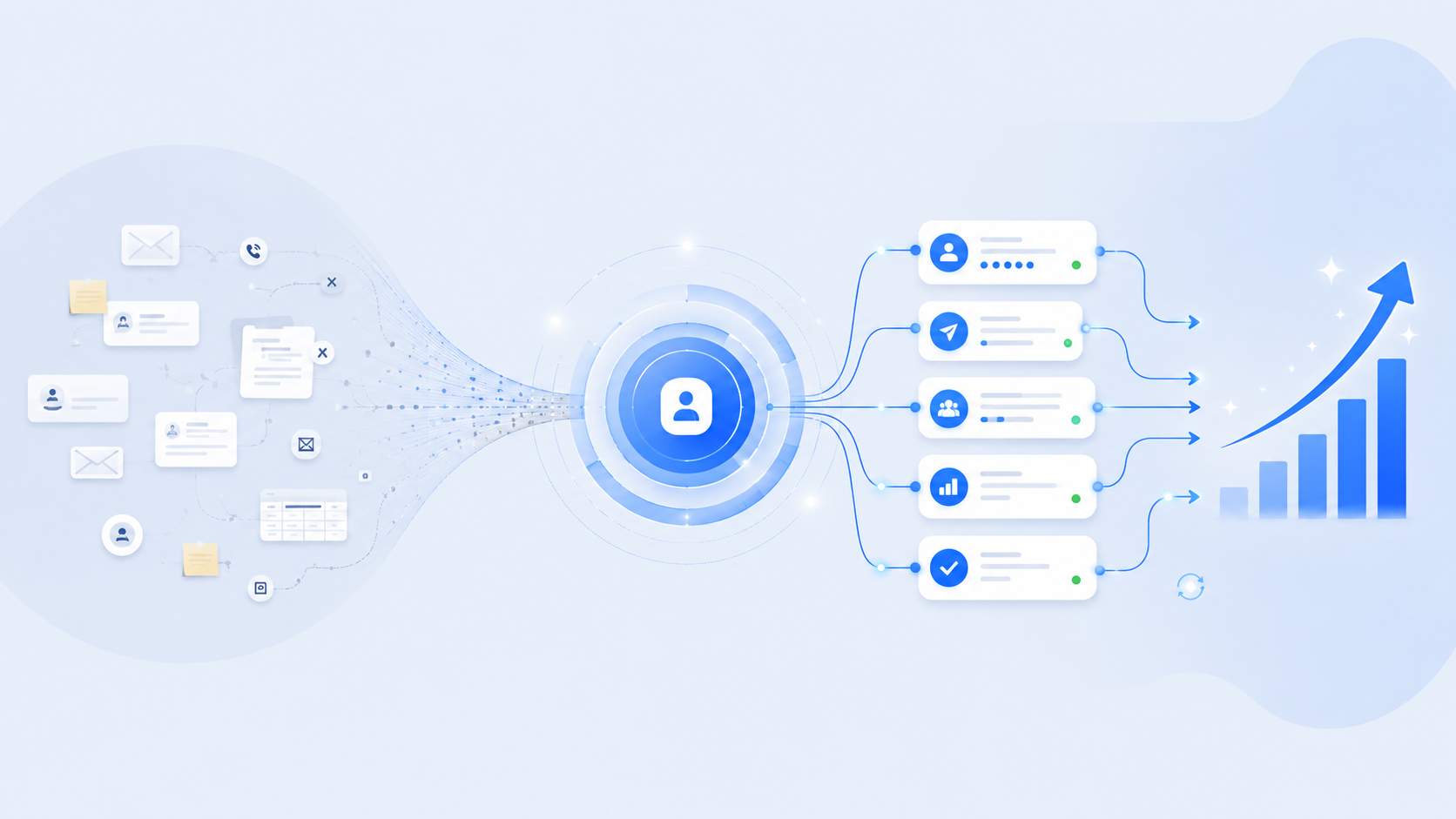
Many companies are sitting on an untapped goldmine within their CRM system. But in 2026, it is no longer enough for the CRM to be a passive archive. The system must become an autonomous engine that drives growth while the organization focuses on strategy and execution.
The cost of standing still
Many leadership teams share the same feeling: they have spent millions on platforms like HubSpot or Salesforce, yet the data remains messy and outdated. The result is a growing "data debt." The gap between what customers expect in terms of personalized follow-up and what the company is actually able to deliver is only widening.
The truth is brutal and measurable:
- Financial leakage: Data from Gartner shows that poor data quality costs international enterprise B2B companies an average of 130 to 150 million NOK annually in lost deals and ineffective marketing.
- Time thieves: Salespeople waste over 27% of their workday due to inadequate data. That equates to approximately 500 hours per employee per year that could have been spent on customer interaction.
- Customer churn: 44% of companies lose more than 10% of their annual revenue solely because the information in their systems has become outdated.
Sources: Gartner, Validity
When your best talent spends a quarter of their time searching for information instead of closing deals, it is not a technical problem—it is a drain on your bottom line.
From "System of Record" to "System of Action"
The winners in 2026 have stopped treating CRM as a "System of Record" (where we store things) and have transformed it into a "System of Action" (where the system takes action).
The key lies in Agentic AI. Unlike yesterday's chatbots that only answered questions, today's AI agents have "agency." This means they can perform actual tasks autonomously. They can qualify leads, update CRM fields automatically after a conversation, and initiate personalized follow-ups with lost customers without a human needing to push a button.
A practical example:
A logistics company is currently using Agentic AI to monitor delays in real time. If a shipment gets stuck, the AI automatically identifies the affected customers, sends a personalized apology via the appropriate channel, and suggests compensation. All of this happens before a customer service representative has even opened their email. The result? A 60-70% reduction in manual inquiries.
Strategic Overview: The Generational Shift in CRM
To understand the leap we are now seeing, we can compare the traditional approach with an autonomous strategy:
Data quality
Traditional CRM: Manual entry, often outdated.
Autonomous CRM (2026): Self-cleaning and automatically enriched.
Sales process
Traditional CRM: The salesperson must find the prospects.
Autonomous CRM (2026): The AI agent serves up warm leads.
Customer follow-up
Traditional CRM: Reactive (when the customer contacts us).
Autonomous CRM (2026): Proactive (the system anticipates needs).
Time allocation
Traditional CRM: 27% administration and searching.
Autonomous CRM (2026) > 90% focus on value creation.
How to prepare your organization for autonomy
Implementing agentic technology is not an IT project; it is a business project that requires a methodical approach:
- Sanitizing the foundation: You cannot put an AI agent on a dirty database. Start by automating data cleansing so that your decision-making foundation is accurate.
- Identifying "Micro-workflows": Find the small, repetitive tasks that steal time—like retrieving background info on new leads or updating contact fields—and let AI agents take these over.
- Human in the loop: Use AI to generate insights and drafts, but ensure that your brand and strategy are always quality-assured by people. AI should empower your employees, not replace their judgment.
The way forward
In 2026, the biggest risk isn't failing with new technology, but letting competitors automate away your margins while you wait for "perfect data." CRM success is no longer about cleaning up old databases until you're blue in the face—it's about putting intelligent agents to work.
At Axaz, this is our core expertise: We help companies create real, measurable value with AI agents through the HubSpot CRM system.
We see that many have the right tools but lack the bridge between AI technology and daily operations. We build that bridge, transforming HubSpot from a passive archive into an autonomous growth engine for your business.
How we rig HubSpot for value creation with agents:
- Strategic architecture: We set up HubSpot so that AI agents have the context they need to act independently, proactively, and precisely toward your customers.
- Seamless automation of time-wasters: We replace manual routines with autonomous agents that, for example, qualify leads, personalize follow-ups, and close the gap between marketing and sales.
- From cost to revenue: By freeing up time from administration, we ensure that agents in HubSpot directly contribute to increased win rates and faster sales cycles, while your best minds focus on customer relationships.
Don't try to revolutionize the entire company overnight. Start by identifying one process that steals time from your people, and let us put an agent on the job.
Ready to unlock the value of your platform? Do you want to know how your company can go from manual data entry to an autonomous growth machine? Get in touch with us at Axaz, and we’ll have a no-obligation chat about how we can help you unlock the full value of AI agents in HubSpot.
Sources:
- Gartner: https://www.gartner.com/en/data-analytics/topics/data-quality
- Validity: https://www.validity.com/resource-center/the-state-of-crm-data-management-2022/
How we work with
CRM
at Axaz?